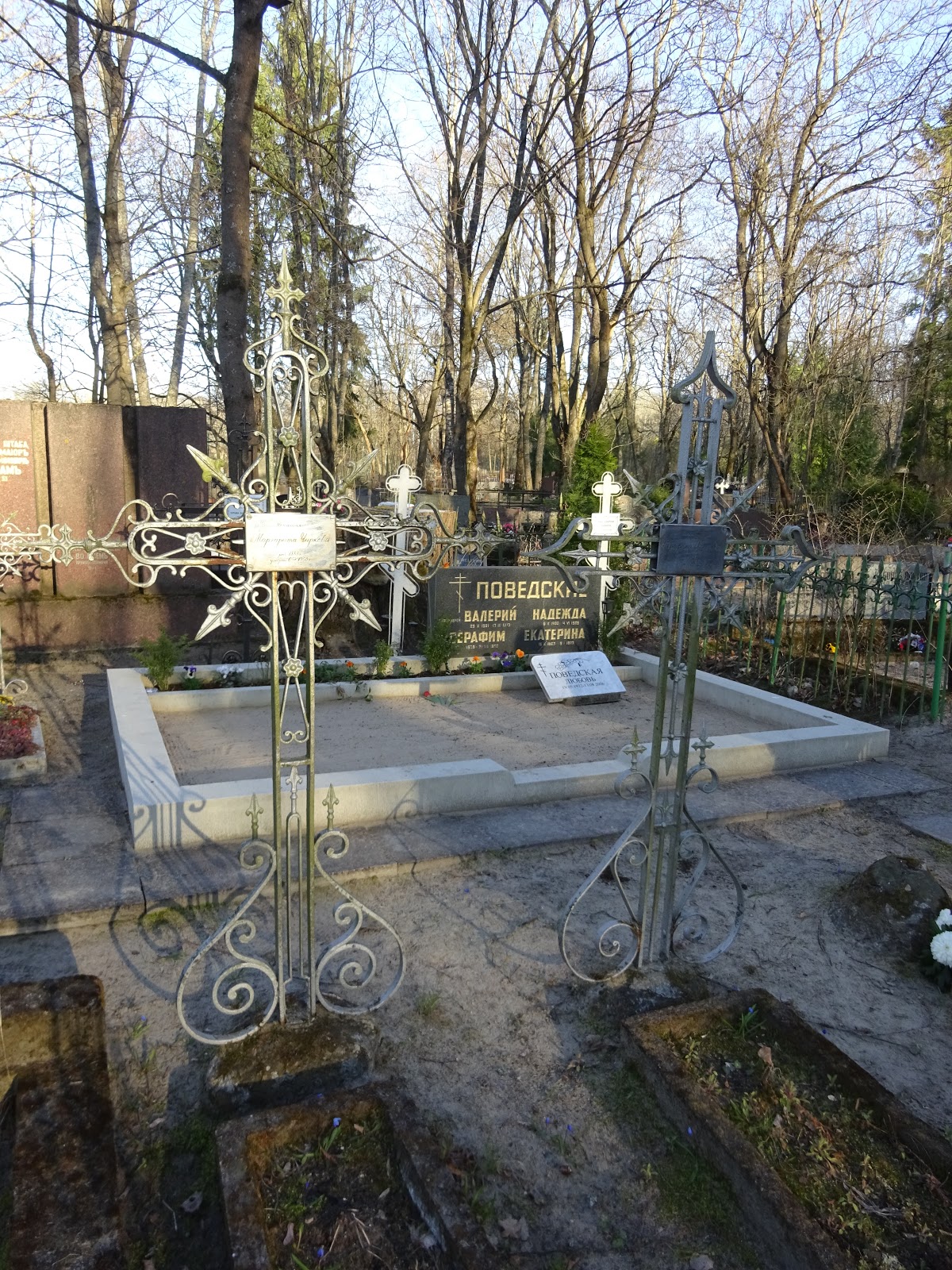
A Visit to a Cemetery Near where we live, right in town, is the Aleksander Nevsky Cemetery. It was founded in 1775 and is a treasure trove of history. just beckoning for discovery. We found it quite by chance one day as we were on a long walk. As we entered, we felt as if we had been transported to another time in the world - a time when things were very different and very simple. A place where culture played a large role in daily life, including the burial of the dead.
Main gate of the Aleksander Nivsky Cemetery
Closed to automobiles. To enter through the gate, you must walk through the small portal on the left
Many graves are placed in raised mounds like this one
Many graves are grouped within cast iron fencing
The crosses are usually very large and decorative
This gate was placed in 1908
All around us are the markings of the human race in dealing with their mortality. It is a somber place with many reminders that death is a portal we all must pass through at some time in our sojourn here on earth. The setting sun, see picture below, symbolizes the end of a mortal journey. Yet in the midst of death, there springs forth the hope of a better life, much like the hope of flowers that push their way through the wintered soil, reaching, ever reaching for warmth and life.
Spring flowers symbolize the hope we have in Jesus Christ for a new life, free from the pains and sadness of physical and spiritual death
Tire Change and Super Saturday in Riga Part 1. In April, when the snow is supposedly through for the winter, we are required to have the snow tires exchanged with the regular tires. This must be done in Riga, Latvia, as that is where the car is inspected and registered. It just so happened that the Super Saturday in Riga was going to be held the same weekend, so we decided to do both. Our faithful YSA here in Tallinn wanted to attend so the three of us drove to Riga on Friday. We have been to Riga several times, and each time we go, there is a "thing" that I've always wanted to stop and get a picture of because is was so unusual. This time, the sun was out. It wasn't raining or snowing. We stopped. I took the pictures. So, here is the backstory behind the "thing" I wanted to look at. In the 1700s, there lived a German baron by the name of Hieronymus Karl Friedrich, Freiherr von Münchhausen. Baron Munchhausen was a minor celebrity for his outrageous tall tales based on his military career. Upon hearing some of the stories told by Munchhausen, Rudolph Erich Raspe, a German writer, began to write magazine pieces about a character that was loosely based on the baron. He didn't even change the name. The real baron was a little upset, but couldn't sue for damages as Rudolph wrote the pieces anonymously. At one time in his career, the baron and his wife lived in Riga for a while. In his honor, there is a Munchhausen museum in the village of Vidzeme, Latvia, where the following pictures were taken. One of the many impossible tales told by Munchhausen was about his riding a cannonball while fighting the Turks. He rode the cannonball right into the Turkish palace and escaped unharmed. There are a few movies that have been made that depict this famous ride on a cannonball.
Part 2. After we checked in at the hotel, we went for a walk into the city to find some dinner. We stopped at a Chinese food cafe where we would choose our entree from one of several pre-cooked meats. Then they would place our order in the microwave to heat it up. I paid for dinner for four people and the total bill was less that 6 Euros ($6.50). We were ready for dessert and stopped at a French cafe and bought a box of colorful macaroons. I had never tasted these before. They practically melt in your mouth. So good!
But wait, dessert wasn't done yet. We went next door to Emils Gustavs, a chocolatier. The choices were just too hard to make with so many fine chocolate pieces to choose from. Sister Allred decided upon a large almond crumb cookie attached to a pure chocolate disc. She said it was heavenly. We found out that our treats evaporated as soon as we left the shop. How rude! We went on to view a few more places and then went back to rest for the night.
Sister Allred's almond-chocolate cookie
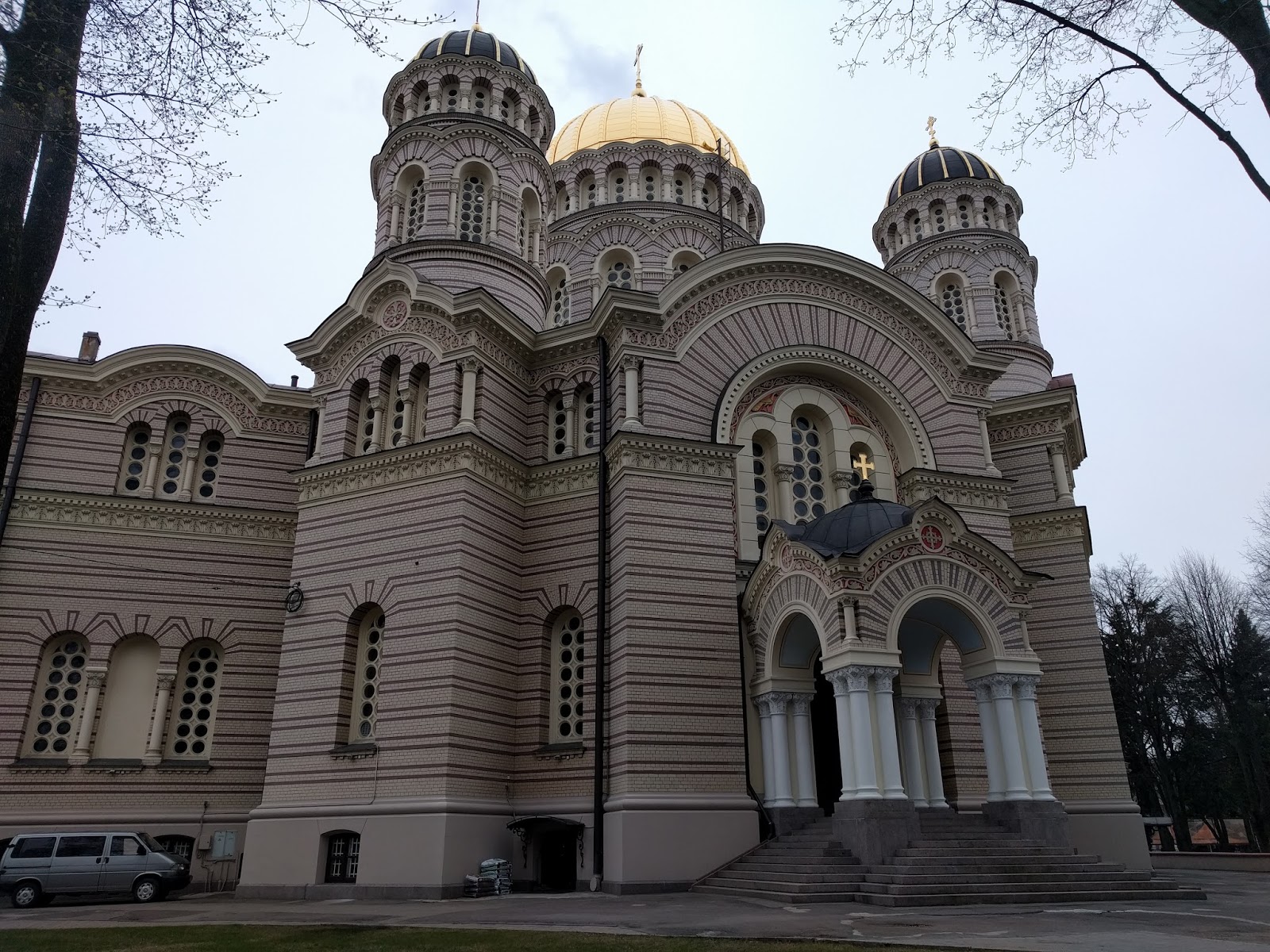
Riga Nativity of Christ (Orthodox church)
Another view
If you zoom in, you'll see the details
A yellow church
Part 3. Super Saturday was held in the new church building that was dedicated by Elder Ballard last year. It is like a stake center but not spread out like in the U.S.. This building has three levels with the chapel and cultural hall on the 2nd floor. Very cool. Before it started, we helped Elder and Sister Barnes prepare some of the fruit and vegetables for the lunch and set up chairs. The meeting was conducted by the YSA council and we had about 15 kids (included were 3 investigators) who attended. We heard a talk about prayer and communicating with God, then we had a demonstration on how to use the Gospel Library more effectively on our smart devices. We played some really fun games and then settled down for some taco salad (U.S. style) and homemade carrot cake. After lunch our CES Coordinator spoke to us about asking and listening to gain spiritual knowledge. The highlight of the day was attending a baptism for a YSA girl. It was all in Russian. Afterwards, we concluded with a short testimony meeting. We said our goodbyes and at about 4:30 PM and set our sights for Estonia and headed home. The funny thing about all this is that we had just changed out the snow tires on the car, and although it had rained all day in Riga, Estonia just had the worst blizzard of the winter/spring. The roads were all clear and we arrived home safe. The weather here can turn on a dime but I hear that tomorrow will be warmer . . . maybe.
Sister Allred being a "wobble wobble"
I call this the Evolution game. It was quite fun
The taco lunch line begins
We met a lovely girl from Kazakhstan
Sunday, April 23, 2017
Day Trip to Paldiski
Paldiski is a Baltic Sea port in north-western Estonia. Originally it was a Swedish settlement known as Ragervik in 1783. In 1962, Paldiski became a Soviet Navy submarine training base and hosted over 16,000 military personnel. They also built two nuclear reactors that were, at the time, the largest in all of the Soviet Union. Because of its importance, Paldiski became a closed city and completely closed off to civilians. After the collapse of the Soviet Union in 1991, the Soviets began to withdraw from Estonia and by 1994, Paldiski was reopened to civilians again. Left behind were several military barracks and other structures, some of which, have remained untouched to this day. The nuclear reactors were shutdown and decommissioned and the fuel was sent back to Russia. Paldiski is only a 50 minute drive from Tallinn and some people have found it much cheaper to rent there and commute to work in Tallinn on the train. Our main purpose was to allow Sister Allred to do her visiting teaching to a young family who recently moved there. The picture that follow are some of the things we saw there. We will go back again, I am sure.
The wind was very strong and about blew my hat off
The Paldiski shelf, it abruptly ends at the sea.
Lighthouse at the point
White caps on the Baltic
This Russian Orthodox Church
was originally built in 1851
but was recently renovated
Evacuation of Ingrid Finns
During the first months of the war between Germany and the Soviet Union (June 1941), Germany had conquered the greater portion of an area in Russia (around St. Petersburg) called Ingria. This area was inhabited by about 65,000 Finns. Because of famine, early winter and the ravages of war, the Ingrid Finns faced starvation. Not willing to supply food for the Finns, German authorities proposed to resettle the people back to Finland. Initially, Finland rejected the idea but later changed their mind by the end of 1942. By this time, Germany no longer agreed to the plan and agreed to send only 12,000 Finns. However, many more managed to escape and traversed through Estonia to refugee camps. One of these camps was in Paldiski. Conditions were harsh and about 2,000 Finns died there due to sickness in the camps. Eventually 63,000 Finns were resettled in Finland. After the armistice was signed in September of 1944, Finland was obligated to extradite the Ingrid Finns back to the Soviet Union. This memorial is to commemorate the Ingrid Finns who died here while waiting passage to Finland.
Memorial to Ingrian Finns
This house has no historical significance, we just liked it a lot
Sunday, April 16, 2017
Haid Ülestõusmispühi (Good Uprising Holiday) The Young Women of the branch put on a Easter celebration for the Primary children. They painted a larger than life mural of Christ and decorated the room with hidden eggs all around. After they heard the Easter story from Sister Allred, they each made a craft. Then the children ran throughout the building hunting for candy treats. And if that wasn't enough, they then put on their coats for a hunt outside. Afterwards, they served a berry wonderful cake for all to enjoy.
Super Saturday is put on about four times during the school year for Seminary and Institute students. In Estonia, Super Saturday has usually been in Tallinn, but this time it was moved to Tartu, a college town in southeast Estonia. This event is staged to promote the CES programs in the country and to give the students an opportunity to visit with friends from far away. The program usually has a few speakers and then an activity (game) and a service project with lunch served to all. This time the youth visited an animal shelter and helped clean the pens and yards. After a lunch of build-your-own burritos, the YSAs went to tour the Eesti Rahva Muuseum (Estonian National Museum) there in Tartu. Wow, it is huge and our feet gave out before we could see everything by closing time. We will have to come back again, it was really good. Here are a few pics.
A girl from our branch spoke in the opening session
I made a new friend (she loved my iPad)
This represents the Ural River and all the cultures that depended on it over the centuries
Regional dress typical of Estonia
Woven cloth and tapestries
Decorative Jewelry
Beads and necklaces
Look at the detail in the handwork (womans cap)
Decorative craftsmanship in this wooden chest
A very old loom for weaving
Typical wedding day attire
Beautiful tapestry
The original "Big Gulp". The room was full of them, all different in one way or another
My favorite in front of my other favorite
This steam tractor deserved another shot
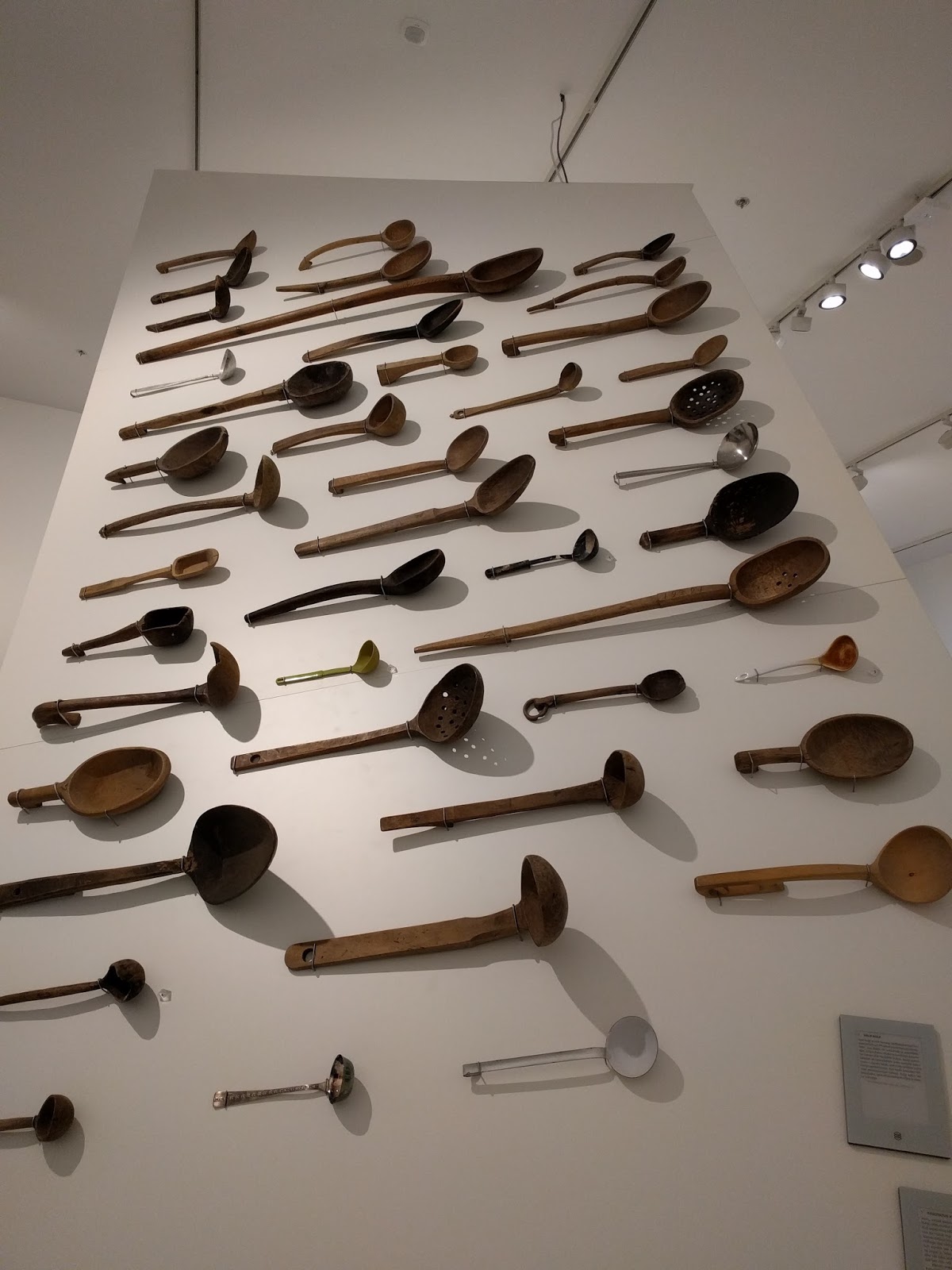
A collection of ladles and spoons, all hand made of course
Adults riding a "kiik" (swing)
At last, a chance to rest our feet
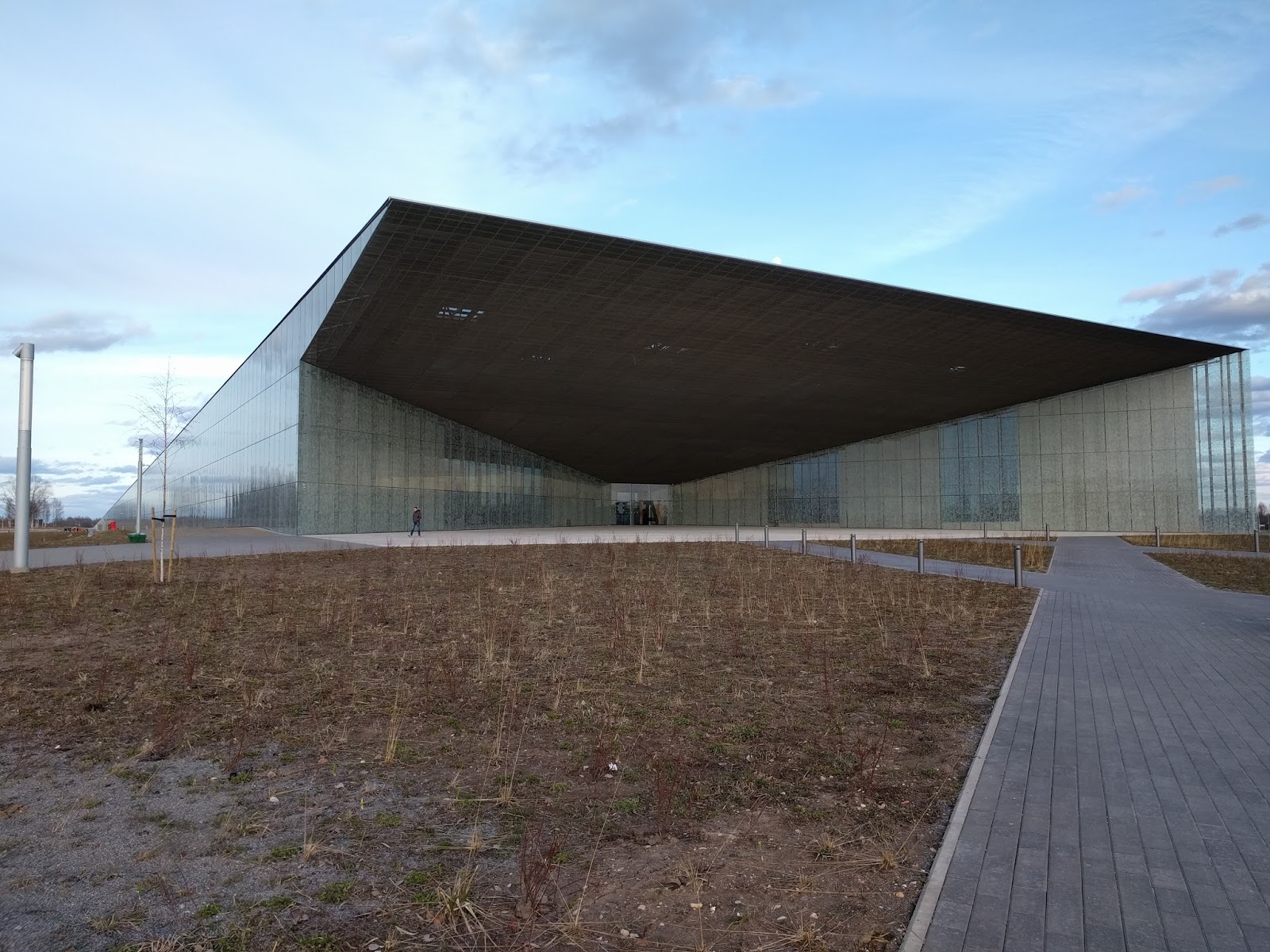
Front view of the museum
A long view
We found this upside down house outside
As we headed home, this was our view
There was much more that just this small sampling of things. Like I mentioned before, this will take two trips to see the rest of it. Anyone want to come over and visit? We'll even pay your admission to the museum.