When one lives by the sea, one can expect to see, a craft that sails in the sea. Do you see? Yes, we went to the Estonian Maritime Museum. We've been wanting to go since this summer and just hadn't made it there yet - until now. The setting is inside a giant seaplane hangar right next to the dock. Inside is a collection of water going vessels (ice going as well) from the ancient to the modern, post-WWII era. As with any historical places in Estonia, there is always some correlation to occupational forces that Estonians had to endure. Many of the military ships used in Estonian waters were Russian or German built. There was a temporary exhibit about Vikings and how they lived based on the ruins found at excavation sites in the Nordic regions. On display was also a complete and intact mine-laying submarine (the EML Lembit) that served in Estonian waters. The Lembit was built in 1936 by Great Britain. When she was finally hauled out of the water in May of 2011, she was the oldest floating submarine in the world. Here are a few pictures.
Meremuuseum of Estonia
Museum Floor
Old ships to visit
Sail boats for water and ice
Front hull of the EML Lembit
Lembit torpedo tubes
Crew slept above the topedos
Ancient looking controls
A valve and pipe for everything
Galley (kitchen)
Diesel engine that powered the generator
Generator that powered the electric motors
A view up top
A view of the conning tower
Viking stone art?
Artistic, those Vikings
Viking swords
Scenes of death and the afterlife
This explains the previous picture
Fat Margaret
When the reconstruction of the gate system of Tallinn was implemented in the early 16th century, this tower, which faced the sea, was built unusually large - partly as a way to impress visitors but mostly to scare away potential invaders. It measures 65 ft. in height, 82 ft. in diameter with walls up to 16 ft. thick. Among its primary use as a fortification, it has been used to store munitions and at one time served as a prison. It is now used to house the rest of the displays of the Meremuuseum. It has 5 levels of displays that include more of the civilian aspects of work in the sea.
Fat Maragret
I threw this in for Bishop Lynn Campbell
A gun that could shoot a dart to carry a rope to another ship
How rescues were made
Gotta love the knots
Deep sea diving suit
I threw this in for Gary Hinton
Sinking of the MS Estonia, 1994 where 852 lives were lost
Memorial for the MS Estonia
View from atop Fat Margaret
Sunday, October 16, 2016
Just So You Know . . . In case you think that all we do is visit museums and tourist hot spots, there are many and more important things that we do, especially with the Young Single Adults and with the branch and the young missionaries. The problem we have in showing you some of these things is that we would be in violation of a policy concerning the identification of people and/or their names on social media. We have to be very careful about privacy here, so if I post a picture of people, it is usually from a distance and they are not named. I will try and post about more of our day-to-day activities in the future. With that said, I'll tell you about another adventure we had. Swan Lake
This is a chocolate model of the opera house
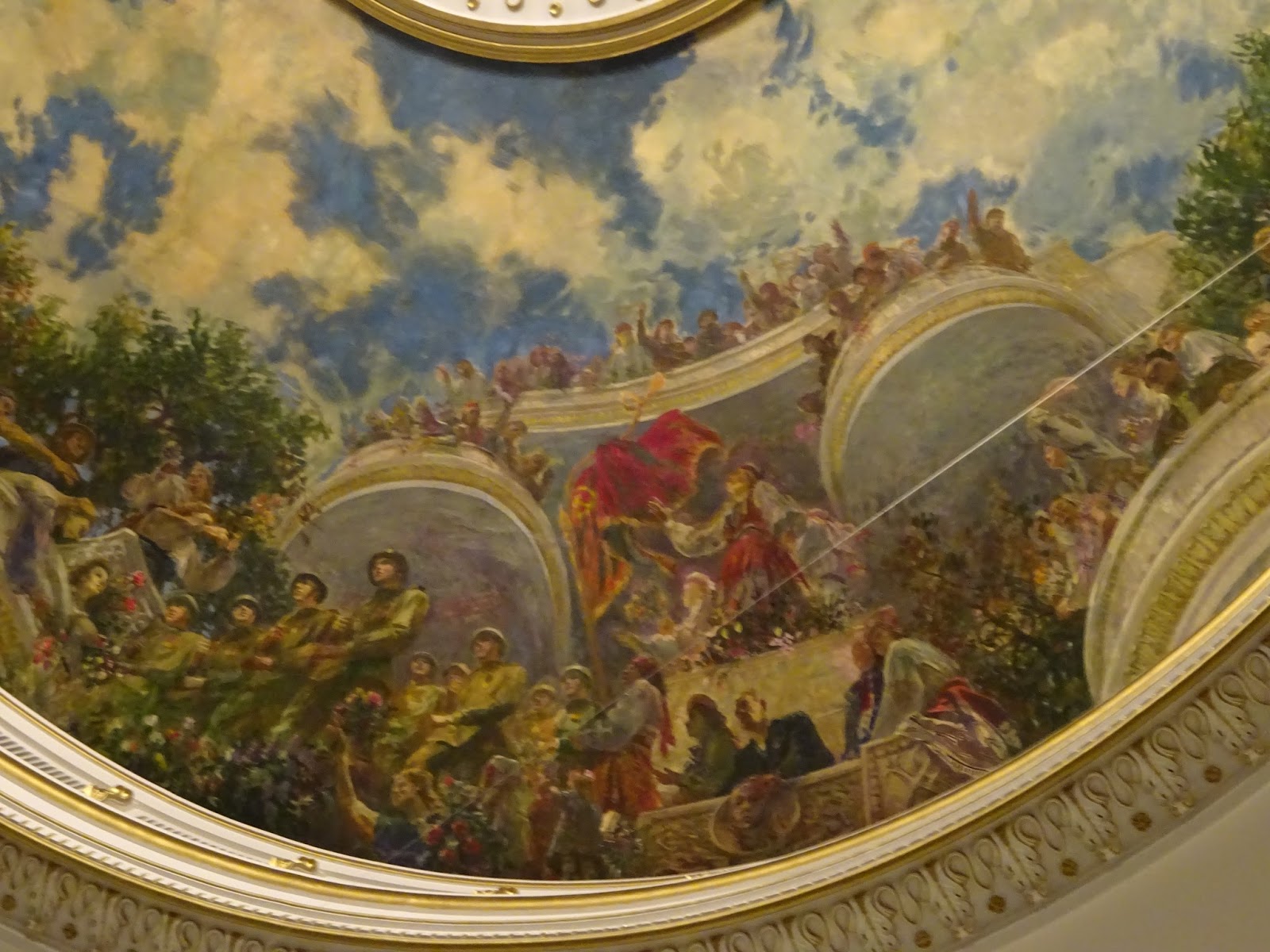
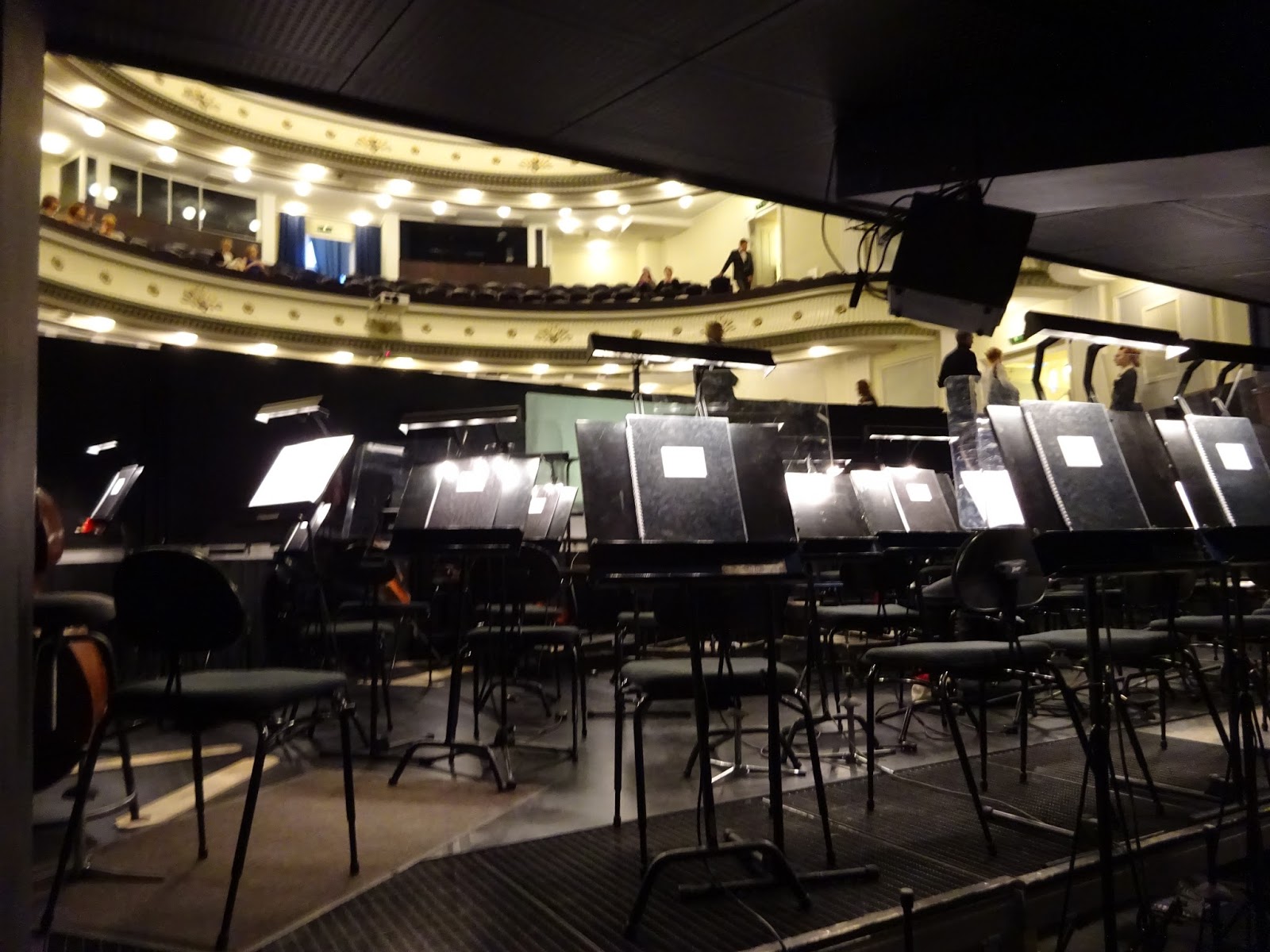
The Estonian National Opera House is a 5 minute walk from our apartment. We have walked by it many times and wondered what shows or concerts are playing there. We found out that they offer a guided tour of the building that would include all things back stage. We decided to give it a go as it would be cheaper than buying a ticket for a show. It just so happened that Tchaikovsky's Swan Lake was showing that night. Our guide happened to be the flute player for the evening's performance. First we were given a history lesson on how the building came about. When it was built in 1913, it was the largest building in Tallinn. It had two parts: one as a theatre and the other as a concert hall. During WWI, it housed a military hospital and an Orthodox church. In 1919, the first Estonian parliament met in the concert hall. In WWII, it suffered Soviet bombardment and the theatre part was destroyed. It was later rebuilt. Here's an interesting side note: For years, while under German occupation, the Germans built a opera house. Since much of the aristocracy lived in Old Town, the opera house faced Old Town to receive it's well-heeled guests. When Estonia was able to build her own opera house, they built it right behind where the German opera house stands and had it's doors facing toward the city where everyone else lived, thus symbolizing an edifice for the "people." Our guide took us to the theatre where the crew were preparing the stage for the performance. She took us back stage and showed us the modern scene changing apparatus that allows for changing scenes by computer, all automated. Next we saw where the props are stored and made. We saw the dancers warming up in rehearsal room. We got to see where all the costumes are made and where the makeup is done. We learned that there are an awful lot of things to plan and keep track of many, many months before the first scene is ever rehearsed. We actually met the director for the evening. He was in a bit of a hurry, but was pleasant and carried a bouquet of flowers. I'll let the pictures do the rest of the talking.
This is the theatre. Just look at how this is decorated
The Theatre
The stage. Notice the swan flying on the screen
Detail on the moulding
Artwork on the ceiling
Scene building shop
Dancers costumes. Real feathers!
A view of the seats from the orchestra pit
Sunday, October 9, 2016
Kiek in de Kök Museum Kiek in de Kök is a nickname that comes from Low German which means "peek into the kitchen." Towers that were built to be part of a town's fortifications were sometimes called "Kiek in de Kök" because observers in the towers had the advantage of being able to see into the kitchens of the townspeople. This was a common name for towers, even though they were not all built in Germany. Tallinn has a big one, and inside is a museum with six levels. The stairs to each level are steep and narrow and everything is in stone. Of course there are no railings or elevators. OSHA would have a field day. But this is Estonia, and it has a rich history of centuries filled with a people trying to establish themselves on the land. Originally built in the 1470's as a lookout for intruders, it is about 125 feet high and the walls are 13 feet thick. There are 27 embrasures for cannons and 30 for handguns. The museum inside shows various military armament and also a room dedicated to ancient publications of hymnals. The pictures will have to speak for themselves.
Kiek in de Kök
Old Cannon
Larger Cannon
A worker gathers bodies left from the plague
Diorama of the original fortifications
Hymnal collection
A view to the West
A view to the East
Classic view of Tallinn
No tower is complete without a stretching rack
Underground Tunnels of the Bastions Adjacent to Kiek in de Kök is the bastion underground tunnels. In the 17th century, when the Swedes were running things, they built ingenious underground passageways that would allow them to fire upon intruders from both flanks. They could move munitions and soldiers to different positions under the protection of the stone tunnels and unload their weapons without giving away their position. Over the centuries, the tunnels have been used for other than military reasons. Russia's Catherine the Great imprisoned a monk here who had been an outspoken critic of hers. Probably because of what she did to the monasteries and the monks. Eventually, she refused him food and he died there. During WWII, it was used by the German military. In the 80's, young musicians would play their music down below so as to not infuriate their Soviet occupiers. They were used also as potential fallout shelters during the cold war. They were outfitted with air filters and water. Vagrants lived there for many years before they were all removed.